Featured post

Follow our travels

If you want to see where we've been, you can use this interactive map. Click on the markers to see more about where we have spent the ni...

Thursday, 5 December 2019

Gale force winds and vertiginous monasteries


We have been so lucky with the weather on this trip. Long hot summer days in Norway and Finland, followed by a seemingly endless, warm and gentle autumn as we headed south through the Baltic states into Poland and Hungary. Romania and Bulgaria provided balmy days and plenty of sunshine, and that lasted well into our journey down through Greece. So we couldn't really complain when we found ourselves buffeted by a gale and driving rain while parked alongside the long beach at Veliko, a coastal resort at the top of the Pelion peninsula. 


Along the gorge
The day had started in far better shape at the car park under the shadow of Mount Olympus just outside Litochoro. On our walk around the village the day before we had noticed a sign to a trail so the following morning we harnessed up the spaniels, donned walking boots and rucksacks and set off. The path took us through the gorge carved out by the river Enipeus past stunning rock formations. The icy waters were no barrier to Max who decided to plunge in for a swim. Eventually we climbed the path up to the goat pastures at the top of the hill before walking back down a quiet road to Florence, pausing only to peer through the gates of a monastery on the way down.
The colour of the water was stunning


The journey to Veliko took us through flat farmland and along a winding coastal road until we dropped down to the sea. Veliko was closed for the winter, the beach bars deserted and most of the properties, obviously holiday homes, shuttered up. Having taken ourselves to bed we were awoken by the strong winds battering Florence and the sound of the rain hammering down on the roof, coupled with waves crashing into the nearby beach. The following morning things had calmed down enough to take the spaniels for a game of ball on the beach, but waterproofs, hats and gloves were the order of the day. For us, not the spaniels


To hell with the weather when there are balls to play with
We had planned to spend more time in this area, following a recommendation from a friend, but the weather made us decide we might be better off inland. Accordingly we took the winding mountain road towards Larissa and decided to head for the village of Kastraki where we had identified a campsite that was open all winter. We rarely use sites but, having been cautioned to plug into mains electric now and again, following the fitting of new batteries, we decided to make an exception. Our solar panel was also struggling with the lack of sun. The site itself was deserted when we arrived, not surprisingly, but a quick phone call found the owner who told us to park wherever we liked and he would see us in the morning.
Pictures do not do justice to Meteora

The main purpose of visiting this area was to see Meteora, an amazing rock formation of immense natural pillars and hill-like rounded boulders on which, over the years, 24 monasteries had been perched, seemingly defying gravity as they hung off the edge of the precipitous drops. The original monasteries had been built to allow the monks to be safe from Turkish invaders, the bricks of the walls continuing straight up from the natural rock. The only way up was by ladders, which were pulled up when danger threatened, or baskets on ropes into which visitors climbed to be hauled up the rock face. Today four monasteries and two nunneries remain and have become tourist attractions. 


Thankfully we didn't need the ladder
Having walked the spaniels around the village which sits against the towering rock faces, we drove up the winding road to the monastery of Roussanou, which is now a nunnery. Thankfully steps have been provided to reach the building, which was constructed in the middle of the 16th century. We got the impression that the elderly nun collecting the entrance money was not too enamoured with having visitors, and would rather be in her cold cell flagellating herself, assuming this is what nuns do. Neri's jeans did not pass muster, they showed the shape of her legs, so she was sent to put on a wrap-around skirt, a number of which were hanging up in the vestibule. However their small chapel was beautiful with the walls decorated in the colourful icons which are so much part of the religious life of Greece. Our impression of the dour nature of nuns was changed when, having popped into the shop, a younger nun was leaning against the counter chatting away on her mobile phone. I tried a smile for the nun at the entrance when we left, but she was having none of it. I am obviously cursed.

The chapel walls  of Roussanou are covered in paintings

We did try and visit the monastery of Varlaam, the second largest in the area, but it was
The worst sinner got to lay the first brick
closed on Thursdays and Fridays. There are only seven monks in residence so they are outnumbered by the cats who live in the car park, and which had Elsa jumping at the windows desperate to get out. The weather had clamped in again so we continued up over the top of the hills through thick cloud and headed back down to the plains. 


We decided that the weather was not going to get any better and that we should start heading further south. We took the A3 motorway from Trikala which crosses large areas of flat farmland. Now and again we had to pause for a toll booth. The Greek motorway system is run by a number of different companies, all of whom set their own tolls at a bewildering variety of prices. We had become used to paying a euro or two around Thessaloniki but things got more expensive on the A3. The first toll booth charged us €4.95 but, by the second, the price had risen to €7.60. It seemed the latter toll was to pay for the rather posh tunnels through which we passed. Having done battle with Google maps, which often seems determined to take us on the most roundabout route, we turned off the E65 just north of Lamia, to find a quiet parking space on the edge of a minor road. The rain has stopped and we are promised a clear and sunny day tomorrow. 


Monday, 2 December 2019

Three friendly Greeks and the Mountain of the Gods


"Yassas," said the handsome man striding up the road towards us with a coffee in his hand. "Er, would you like to see a tomb? It's only 400m walk from here. I'm going now, if you would like to come with me?" 
"Yes please, we would love to." Five minutes later we were gazing down at the excavated front of a magnificent tomb as our new friend George, an archaeologist working on a nearby dig, told us the story of its discovery several decades ago. It was thought to be the tomb of Thessalonike, a daughter of Philip II of Macedon, whose beautiful tomb we had seen the day before.  He then took us over to the dig where several people were delicately removing layers from the foundations of buildings near the site of the royal palace at ancient Aigai - modern day Vergina. Right in front of us was a fully intact water pipe made from clay tubes, carefully made so that the end of one fitted inside the lip of the next. Plumbing, nearly two and a half millennia old. Before long he and Nick were discussing the Napoleonic wars, his pastime was painting miniature soldiers, and he was impressed by Nick's knowledge of the uniforms. 

The tomb of Princess Thessalonike
We had been walking back from the ruins of the palace, which is currently a building site as restoration work takes place, but where the public is still allowed to mount a small platform to survey the area. This is where Philip II was assassinated at the theatre, and where Alexander the Great learned he was now king. It was a huge area, and was where the whole concept of kings with courts, and courtiers, first took hold. From here Alexander would spread Greek culture far and wide in the largest empire yet seen. Unfortunately the presence of the workforce meant that no photographs were allowed.

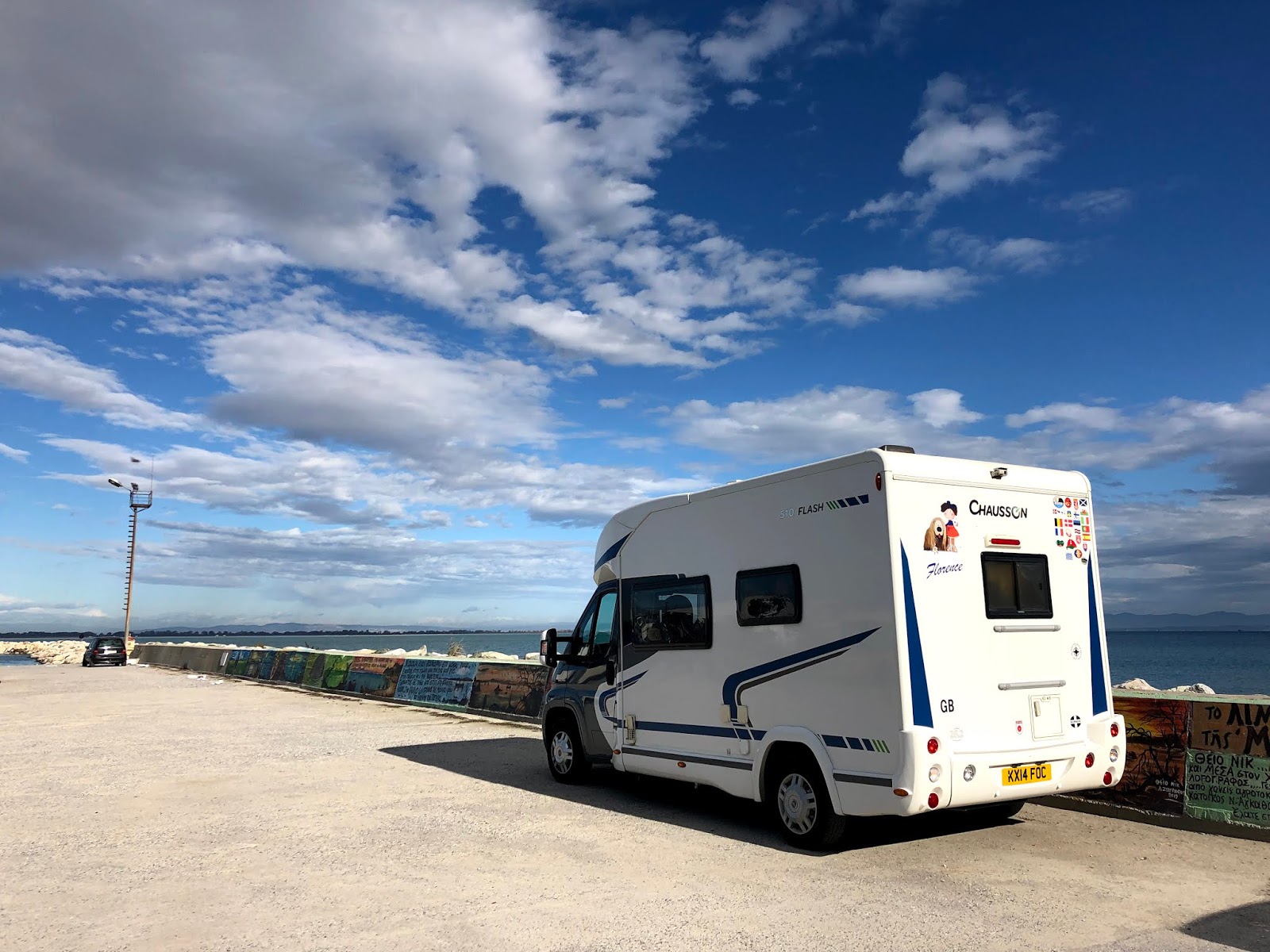
It had been quite a morning, and we were still pinching ourselves about the serendipity that allowed our paths to cross with George as we headed out of Vergina, and back towards the sea. We parked up alongside a harbour wall in Methoni, a fishing village on the Thermaic Gulf, looking back across to Thessalonika and Halkidiki. A series of colourful murals decorated the wall, and many of the rocks behind it. We later discovered that they continued through the village and all along the sea front. That evening we were struggling even to watch the pelicans in the harbour as we came under attack from vicious mosquitos. Nick bravely volunteered to take Max out, and was hailed by an elderly man who'd arrived on a moped. He was Theo Nik, the artist responsible for the murals. Nick learned about the murals, the vegan message they conveyed, and the history of the morosely patrolling port dog, whose two companions had died leaving him in sole charge of the fishermen.

Some of Theo Nik's work


Alexander's Dad, for a change
The next morning we walked along the sea front, past a statue of Philip II and along a path into the saltmarsh nature reserve. We had seen an otter the evening before, and many more pelicans that morning as they bustled around the returning boats, waiting to catch anything edible thrown their way. Sign boards, cracked and faded by the sun, told us that the salt marshes played host to a wide variety of birds, reptiles and even some water buffalo. We could see little over the high reeds, and eventually turned back, noting the position of the water taps so that we could return and fill up before moving on. Before we left we stopped to do a litter pick on the small beach, somewhat disheartened by the sheer quantity of fishing debris - mostly nets and nylon ropes. We left it better than we found it, but at the cost of a rather sore back for me for the next few days.


Pelicans in the harbour

We were heading towards Katerini, where we planned to be on Sunday, but pulled up short to spend the night on the sea front where acres of beach promised a good game of ball for the spaniels, and a long promenade offered a good run for me. It was a sad example of somewhere that had clearly boomed a little too much in the good times, and been unable to sustain itself during the economic crash. Beach bars and hotels were in ruins, an amusement park showed evidence of a devastating fire, and all the toilet blocks had had their sanitary ware ripped out, leaving ugly concrete shells. Some businesses were open in the centre, but it was impossible to see how the thousands of hotel rooms and apartments could ever be filled. 

Abandoned buildings - but a great view of Mount Olympus 


The next morning we drove into the thriving inland town, to discover that the car park was full, and the place was bustling. Luckily we found a place by the kerb only a short walk from the laundrette, and were able to do the laundry and lie low until the car park emptied out, and we could find a space for the night. We wanted to stay in town so that we could enjoy a meal out to celebrate Nick's birthday. A short walk took us to the restaurant, where we were the sole diners, and were personally served by the chef patron. In between visits to the kitchen he regaled us with stories of his time in the UK with his then girlfriend, gave us tips on cooking and wine, told us that extra virgin olive oil was half price that week in a certain supermarket, and brought us extra dishes to try. We left stuffed to the gills.

A birthday meal for Nick


The next morning we watched nervously as the car park filled up around us, and decided to leave while we could still get out. Half of the car park had been given over to preparations for the Christmas market, and the parking attendant was tucking people into any space he could find. Florence is pretty good at squeezing into ordinary parking spaces, but she does need room to swing out, and we didn't want to find we were trapped. Nick guided us safely out, and after a stop at a Lidl on the outskirts for our weekly food shop, we headed up the foothills of Mount Olympus to the town of Litohoro. 

Wonderful displays on Mount Olympus 
Full marks to Park4Night, we'd have struggled to get through Litohoro's narrow streets, but went instead straight to the large car park next to the sports complex just ten minutes walk from the town. After exploring with the spaniels, we left them in the van to have a nap and walked back for a light lunch, and then a visit to the National Park Centre. We were impressed by the exhibition on Mount Olympus, its geology, flora and fauna, the history of mountaineering there, the myths of the Olympian gods and its place in the history of Greece. All beautifully presented, clearly explained and with some glorious photography. We look forward to exploring the area a little more in the morning.


Thursday, 28 November 2019

Gods, tombs and a fall from power


The one figure who dominates this part of Greece is Alexander the Great. We had spent the night close to the ruins of ancient Pella where Alexander was born in 356 BC. It was a wet Sunday morning walk for the spaniels before we drove to the archaeological museum which houses the artefacts found when the old city was uncovered. The most stunning items were the grave goods. The Ancient Greeks believed the dead needed possessions to take with them to use in the underworld and these ranged from household items to perfume pots and weapons and, in the case of the really well off, armour covered in gold leaf. We may think Alexander the Great lived a very long time ago, 2,400 years to be precise, but the museum had pottery that dated from 7,000 BC. It was a sobering thought that Alexander was closer in time to us, than he was to the earliest items on display at his birthplace.
Some of ancient Pella survives


Statues of Alexander are everywhere
From the museum it was a short step to the ruins of the old city itself. Not a lot remains apart from the foundations of the walls and a few restored columns. However under a layer of plastic sheeting, covered in sand were beautiful mosaics which had formed the floors of several of the houses. Luckily the museum had reproductions so we had seen what they looked like. They included one picturing the abduction of Helen of Troy, an event that led to the launching of a thousand ships and the Trojan Wars. All in all we were very impressed with the efforts being made by to preserve artefacts that are of interest world wide.


The Abduction of Helen of Troy
The rain was getting heavier as our travels took us further west to the town of Edessa where we arrived late on a Sunday afternoon. The place was busy with day trippers and the car park was full. We therefore took ourselves up the hill and parked under the trees, by which time the rain was bucketing down. The following morning, having run out of bread, we walked the spaniels back down to the town, heading straight back to the van afterwards to dry out both spaniels and humans. We spent the day in the van with the lights and heating on which used quite a bit of our battery power. Just how much we found out the next morning when we awoke to find the electrical system had shut itself down to protect the, by now, very low leisure batteries.

The rain has boosted the falls a bit
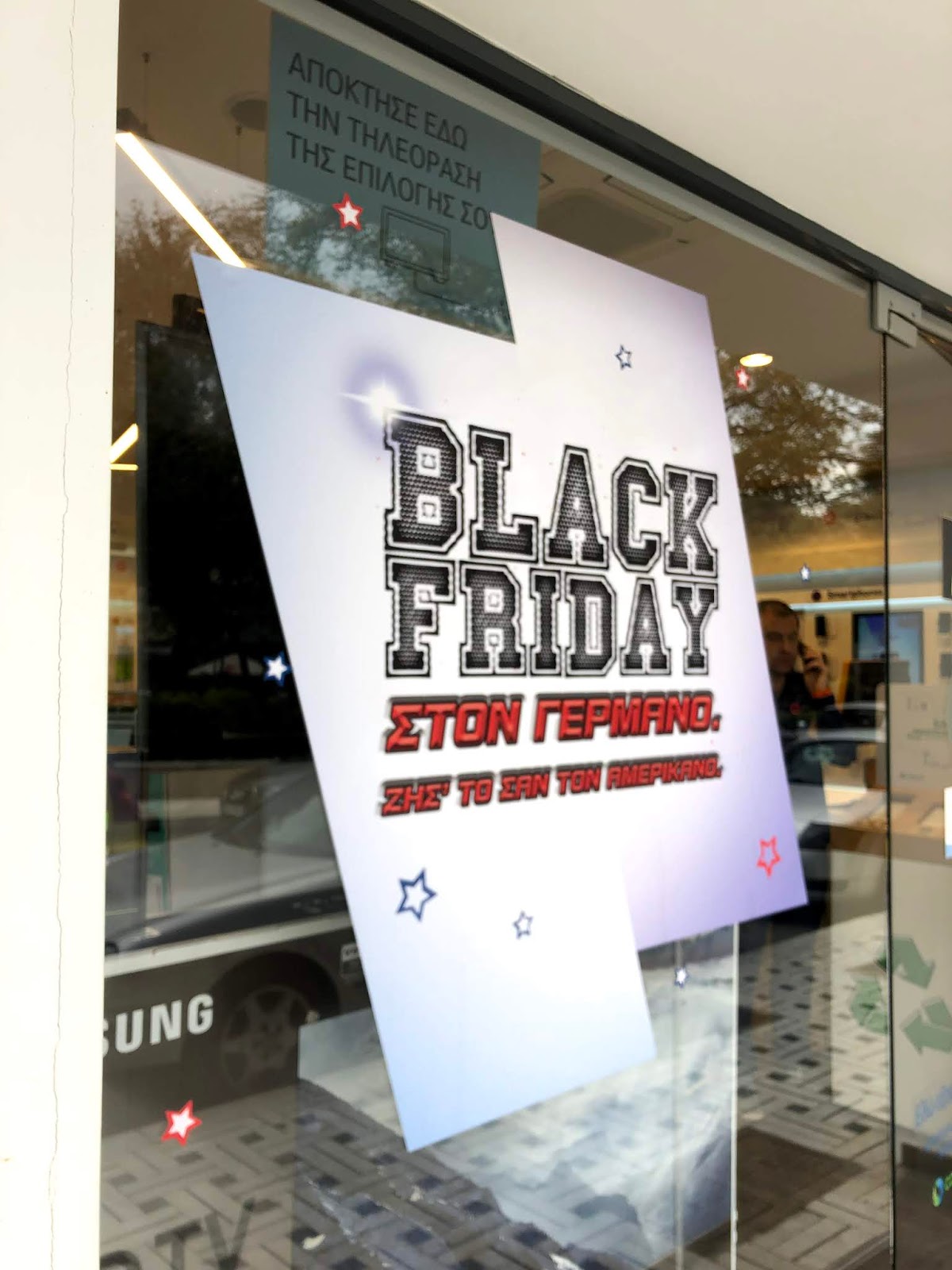
On the plus side it had stopped raining so after a short walk with the pups we drove down to the now empty car park in the town, visited the supermarket and had a trundle around the streets. We were amused to discover from notices in shop windows that the nonsense of Black Friday has reached Greece. We also spent time at the spectacular waterfalls, swollen by the recent rain, that had once powered the mills that produced hemp. 


Impossible to avoid
Obviously our electric, or lack of it, was going to be a problem, so we decided to drive back to Thessaloniki and visit the motorhome dealer where we had stopped off previously. Luckily they offer the facility for an overnight stay and the option to plug into the mains. It turned out that one of our leisure batteries had failed so we got them to install two new ones. There were eight or nine other motorhomes staying there, including two British ones and it was good to share travelling experiences with them. Most travellers in winter tend to be long-termers like us and we discovered the couple from the Midlands in the next van were on a trip lasting seven years. They very kindly invited us in while Florence was having her        batteries done. 

Behind the falls
The following morning, two new batteries installed and 460 euros poorer,  the sun was back which gave us an opportunity to pop into the truck wash next door and give Florence her first clean since Estonia. Thus it was that, in a sparkling shiny van, we set off back around the Thessaloniki ring road, which we have come to know so well, and headed south. Having spent our time with Alexander it was only fair to visit his dad so we were on our way to  the town of  Vergina  (no smutty remarks please) which houses a number of royal tombs, notably that of Philip II. 

We were not disappointed. The authorities have built a museum inside the huge mound that houses the tombs of Philip and other notable figures of his time. He was murdered while attending a performance at a theatre, which you might have thought would have been a warning to Abraham Lincoln. 

The entrance to the tomb of Philip II
We were able to see marble grave stones. more than 2,400 years old, with the names of the deceased still clear. The Ancient Greeks were fans of cremation, Philip's body being burnt on a pyre before it was put into an elaborate tomb. The museum has displays of the various grave goods including fabulous gold tiaras and armour. But the high point was walking down wooden steps to the tomb itself with its huge portico and locked iron door. It reminded me of the Indiana Jones films. 
Names 2,000 years old were perfectly legible


This gold box held the remains of Phillip II

Tonight sees us on the edge of an almost empty car park on the outskirts of the village, which we are sharing with a French couple whose van is parked just below us. For a time the rain has ceased, the sun has been out and temperatures are back into the late teens and early twenties. Next week promises colder weather as we head further south to our eventual Christmas destination in the Peloponnese. 
A painting from the tomb showing the abduction of Persephone by Hades


This man was commemorated along with an image of his dog


Saturday, 23 November 2019

A town called Stavros, and floods hit Macedonia


"Hello everybody peeps, Stavros 'ere". It was all I could think of as we headed for the town of Stavros: Harry Enfield's Greek kebab shop owner. We had spent an uneventful night in a car park at the far end of the beach in Stratoni, and after a drizzly walk around town and a trip to the bakery, we were ready to move on. It was a short 30 minute drive to the north-east edge of Halkidiki where miles of golden sand welcome thousands of visitors in summer, but most places are shuttered up in November. 


Cats are also on hand to help with the catch
We pulled into a parking spot by the Stavros harbour, next to a small Spanish camper, and hunkered down to watch the rain, the anglers and the occasional returning fishing boat unloading its catch. It was a good chance to catch up with some correspondence, and do some reading. A couple of short forays into the town had established that we couldn't even treat ourselves to lunch, unless we wanted little more than a cold roll. 

The next morning was only fractionally brighter, and my morning run involved several detours to avoid flooded roads. It stayed dry enough for a trudge along the beach with the dogs, and a brief visit to the wonderful Thursday market, with its ample supplies of fresh vegetables, fish and eggs, along with some of the random assortment of goods found at almost any market in the world. 


Stavros: It's not like this in the brochures

It was the end of our ten day trip around Halkidiki, which had given us a real chance to relax and take things easy after some longer days driving and trying to see as much as possible in Romania and Bulgaria on our way through. We'd decided to head back to the Thessalonika suburb of Kalamaria, where we had spent a couple of enjoyable nights two weekends before. If you had told me that one of my favourite overnight spots so far would turn out to be a patch of rough ground on the edge of a busy city I would have been highly sceptical. But for us it was the perfect place. Still fairly clean after our litter picking on the last visit, looking straight out to sea, and right next to the lovely waterfront walk into the centre. We were able to drive straight back into the place we had been before, and the sun came out to dry the puddles.


A multi-million pound development spot, one day

A stroll along Thessalonika's waterfront
First thing on Friday morning Nick jumped into a taxi with the laundry, while the pups and I went for a walk. Nick was back in time for lunch with clean laundry for us and the dogs. We'd discovered on our previous visit that Easy Wash has special washing machines and dryers for pet bedding, much to the dismay of Max and Elsa, who view clean bedding with something between suspicion and disgust. In the afternoon it was my turn to venture forth. 


We were on a mission to find a Greek data card, as Vodafone's website is still unable to process purchases of additional data once our monthly allowance runs out. We had failed to find a sim-only data card at the Cosmote shop in Polygiros (sold out), but Nick had found one in the shop near the laundrette - only he hadn't had his passport with him for the purchase. Neither of the Cosmote shops I walked to in Kalamaria stocked them (only in the summer) and I was starting to get a little weary of their attempts to get me to trade up. So after a little more research I discovered another cost effective offer from Greece's smallest provider, Wind. I was quickly and easily able to get a free sim-card, and just pay for the data I wanted loaded. I hurried back to the van to see if it would work in the mifi, and phew, it did. Result. 

We had each done some cleaning while the other was away from the van, and Florence's insides were looking better than they had in ages. We decided to treat ourselves to a meal out, as there was a restaurant with very good reviews about five minutes walk away. The reviews were justified, and after an excellent pork fillet and sea bass, with some good and very cheap local wine, we were back at the van before the pups had even missed us. 


The water garden
There's a song about this one...
Saturday dawned fine and warm, and after a lazy start we ambled the full length of the waterfront and back. While the beach resorts are now dormant, Thessalonika is a year round destination, and the area was bustling on this fine Saturday. The new waterfront is only six years old, and Lonely Planet calls it: "evidence that architecture can change the world by changing public space and improving daily urban life." The 3.5km walkway has a cycleway, path for people with visual impairments, an avenue of shady trees, water fountains (with dog bowls) and twelve gardens with a path linking each to the next. These include traditional rose and herb gardens, water gardens, native planting, and playgrounds. There is a pet friendly garden, and one laid out with street signs to help children learn road safety. There are cafés and restaurants, tennis and basketball courts, and a bike hire place. Max and Elsa met just about every dog in Thessalonika, we watched rowers training, tourist boats pootling around the harbour and souvenir stalls setting out their wares. Really, every city should have one.  


You should have seen the crew!
When we got back to the van we had chance to chat to a Polish motorhomer with a Chausson - same make as Florence but a van conversion. They had driven down through Serbia and were planning to leave their van in Greece and fly down to travel at intervals over the winter. It was good to share stories.

Soon it was time to leave, heading west towards the great archeological sites of Macedonia. We had planned to stay the night on a farm near Pella which had been recently added to Park4Night as a motorhome stopover. Unfortunately when we got there we were greeted by a sea of gloopy red mud. Three eager young men, a Brit and two Germans, were living on the farm and helping the owner to try to restore it. They did their best to find a way for us to park, but the floods which had swept through a couple of days before had made it impossible. One of the German lads kept saying: "You just can't stop the water." They were clearly upset at the state of the farm, but unable to know where to start with the clean up. At least we were able to tell them what needed doing to allow the next motorhome to arrive a chance of parking up, and we left them discussing how to achieve it.


We are just yards from his birthplace
There were few stopovers marked on the map in this area, so we decided to head into the small village of Pella, birthplace of Alexander the Great, and see what we could find. There were no car parks, except for the archaeological sites which banned parking out of hours. There was nowhere obvious in the town, but an old road on the edge has been blocked off at one end, and you find us tonight tucked up at the side of it where we shall be lulled to sleep by the sound of traffic passing a little way away. 


It was Saturday, so JWs at the White Tower


No rowing necessary in this one


Tuesday, 19 November 2019

Mountain roads, paddling dog and a meeting with Aristotle


It can be a strange experience traveling around Halkidiki in November. This is one of the great Greek tourist destinations. In the summer months, there are acres of sun loungers on white beaches, restaurants bustling with diners and beach cafes packed with cocktail-sipping holidaymakers. In November the contrast is startling. Everything closes down, the sun shades and beach goods are packed away, and peace descends. Thus it was, that in the two nights we spent parked on the beach at Sykia, we probably saw no more than half a
Big beach, small van
dozen people, a handful of stray dogs and, to Elsa's ongoing frustration, a lot of cats.


Even the small local supermarket closes over the winter months, as I discovered when I walked there to buy some much needed wine. Luckily this was Friday, so we still had one more day to stock up (all Greek shops close on Sunday). Saturday morning saw us walk the 3.7 kilometres along mainly unsurfaced tracks to the nearest village. One of the joys of this trip is the ability to park up in and enjoy rural areas where tourists seldom venture. In Greece this means walking past tethered cows in fields without fences, picking our way past abandoned cars with weeds growing through the chassis and dodging a skittish horse wandering loose in the middle of the road.

These little shrines are everywhere
                    We try not to spend more than two nights in one location, even if the place is as quiet as the grave. Having walked the spaniels around the headland on Sunday morning, and enjoyed a game of ball on the beach, we decided to move on. As we have mentioned before, we have three months in Greece, so the pace of our journey has slowed. We arrived in the small fishing village of Ormos Panagias in time for lunch and found a parking space in the little harbour next to a Romanian motor home. On our wander out with the spaniels in the afternoon we discovered that, as we had expected, most of the facilities were closed, the notable exception being a restaurant that seemed to be hosting some sort of event, possibly a wedding. To my disappointment no plates were being smashed but I was informed by my better half that this was only done for tourists. 


Max does like a swim
Yet another walk along a long white beach gave the spaniels plenty of exercise the next morning. We decided to make the short trip back across the peninsula to a Lidl so we could do our weekly shop. Lidl has become our go-to for grocery shopping, not least because the majority of their products have English as well as Greek on the labels. We were also running low on dog food. We have to be careful what we buy as Max is wheat intolerant so we found a veterinary practice where the helpful receptionist steered us in the direction of some suitable food, bizarrely made in Ireland and rather expensive. However, no cost is too high to prevent the hazards of a dog with loose bowels in a confined space. 


Everywhere looks like a travel brochure
We drove on to Choros Olinthos, the site of an ancient city which has been partially excavated. To our disappointment it was only open between 0800 and 1400 and we arrived at 1500 on Monday. Even worse it wasn't open at all on Tuesdays. We decided to cut our losses and head back to the village of Gerakini where we had identified a place to spend the night, and a very nice spot it turned out to be. There were a number of imposing buildings along the sea front, not least a huge house that appeared to have been designed by whoever built the Parthenon, complete with sculptures and engraved stonework. We also met the inevitable dogs and stray cats that seem to be a feature of Greek life.


A windy mountain road
The following morning our walk along the beach was enlivened by Max's fascination with the plastic buoys bobbing about in the water. Swimming has become something of a pastime for him and he insisted on paddling out to check that they weren't actually ducks. We called into the town of Polygyros to see if we could get a Greek data card for our Mifi, but were unsuccessful. I have been having a frustrating battle with Vodafone because their system for adding data to our card isn't working. Their customer 'service' leaves a lot to be desired.

Back to the van we decided to cross the high ground to the other side of the peninsula. It was a wonderful drive, climbing to a height of a thousand metres on a series of hairpin bends and enjoying the autumn colours that still linger in this part of Greece. We paused in Stagira on the way down, the birthplace of Aristotle, and visited the small science park that showcases some of the ideas of this brilliant man. Philistine that I am I can't hear his name without immediately bursting into Monty
Aristotle in casual mode
Python's Philosopher's Song (bugger for the bottle). 


Tonight finds us by yet another beach near Stratoni where, once more, no one is around and everything is closed. The weather has clamped in a little and we have wind and rain. Hopefully, things will buck up again for tomorrow. 


Handy fresh water is a feature in Greece
Mountain top view